Thursday, May 19, 2011

God Loves You Enough to Hurt You | Pastor Jake Magee


6 "Therefore, behold, I will hedge up her way with thorns, And I will build a wall against her so that she cannot find her paths.  7 "She will pursue her lovers, but she will not overtake them; And she will seek them, but will not find them. Then she will say, 'I will go back to my first husband, For it was better for me then than now’” (Hosea 2:6-7)

God loves you enough to hurt you.  That sounds odd doesn’t it?  Our experience is that those who cause harm to us desire our ruin, and those who cause pleasure desire our good.  We don’t have a lot of precedent for concluding that love will cause terrible discomfort and pain.  Typically, discipline becomes a mask for abuse; justice is the veneer of malice and hatred.  As such, we naturally assume that to inflict or allow pain and suffering is an expression of hate and not love. 

In his book The Problem of Pain, C.S. Lewis argues God loves us so much that he hurts us; if God doesn’t allow and use pain in some way to touch our lives, he would not truly love us.  Why does he think this?  His thinking is something like this:  

The great problem to be remedied isn’t pain, but evil.  The worst thing for a person is to be evil.  The best thing for a person is to be good.  One form of false-love is one that doesn’t really care all that much about whether a person is good or bad, so long as they don’t suffer.  A true love, however, has as its ultimate goal the goodness of a person-gone bad. And a true love will use the tool of pain to get that person good.  A true love recognizes that pain is inevitable in making bad people good, just as pain is inevitable in re-breaking and re-setting a bone.  God breaks bones in salvation, and for good reason...  

“We are not merely imperfect creatures who must be improved: we are…rebels who must lay down our arms…[and] surrender a self-will inflamed and swollen with years of usurpation is a kind of death” (88-89).   

Since God is love and desires our restoration, and our restoration is bound essentially to the surrender of self bent in on itself (like a tree that grows abnormally), we must expect the untwisting of salvation to be excruciating.

“To ask that God’s love should be content with us as we are is to ask that God cease to be God: because He is what He is, His love must, in the nature of things, be impeded and repelled by certain stains in our present character, and because He already loves us He must labor to make us lovable” (41).

Paradoxically, to ask God for less pain may be to ask him for less love, not more.  To be loved is to be hurt.  His affection for us is so great as almost to be “intolerable.” He demands the perfection of the beloved.  The good news is that he will fulfill his own demands for us, for he doesn't expect clay to make itself into pottery.  The "bad news" is that he will not compromise in making us lovely, leaving no tool untouched that will serve his glory and our good.

Tuesday, May 17, 2011

Why is Theology Important? | Pastor Tim Mason


For the most part, humanity has a hard time dealing with understanding the truths of God. Humanity wrestles with the friction of what God has said and commanded to the point that one actually justifies all actions as they see fit regardless of whether or not it violates the Holiness of God. Is that what God has intended? Biblically, a lot of questions can be raised, which in my mind sends up huge red flags. In no way is my list of ‘Why Theology is Important’ exhaustive.  I think that would fill massive pages of books that would have a lot of footnotes and would fill a small library. This blog is nothing more than an attempt to solidify a foundation in which to jump from as you plumb the depths of Jesus and the Word of God!

Theology Properly Informs Us About God & Ourselves

I would be remiss in thinking we can start this proper understanding of God by not accounting for sin.  All of humanity has fallen short of the glory of God (Romans 1) and because of this humanity can’t help but have a hypocritical bend towards the things of God. A right view of God gives us a right view of ourselves, in turn; a right view of ourselves gives us a proper view of God. John Calvin says this:
“Again, it is certain that man never achieves a clear knowledge of himself unless he has first looked upon God’s face, and then descends from contemplating him to scrutinize himself. For we always seem to ourselves righteous and upright and wise and holy. This Pride is innate in all of us; unless by clear proofs we stand convinced of our own unrighteousness, foulness, folly, and impurity.”  (Calvin, Institutes of the Christian Religion)
Calvin points out that humanity has a distorted view of holiness and righteousness because sin distorts and perverts. This, in and of itself, can either inform or misinform humanity about what holiness and righteousness actually are.

Theology Helps to Establish a Biblical Worldview

EVERYBODY ascribes to a worldview. The issue is the lens in which one sees the world. This point takes on a totally different trajectory if the first point, sin, is not realized. If humanity thinks it’s generally good and holy, the problems of pain and suffering aren’t sin issues; they are nothing more than poor decision problems. The Biblical Worldview is not religious behavior, but a life transformed by Jesus. This thinking is exemplified by Paul in the Book of Acts on Mars Hill in Athens. (Acts 17:22-32) Paul goes to Athens, observes a sense of spirituality and can’t help but see where their “spirituality” was misinformed and perverted. In addition to that, Paul would go on to affirm their sense of spirituality but correct it by bending it back towards the Biblical understanding of God. If our theology is not established how could one decipher or discern the things Paul did? Would humanity get caught up in crazy religious behavior or blatant pagan activity? What would be the difference?

Theology Builds Maturity

Growing in our knowledge of God and the things about him can’t help but inform our behavior. Both Paul and Peter use analogy and symbolism in the form of infants and adults. (1 Cor 3, 1 Peter 2) Obviously there seems to be an inference to growing in truth and knowledge here. If that is the case than there seems to be a reflection of this with human behavior. Paul talks about feeding his followers milk and yet they don’t seem to show themselves to be ready for meat. If your Theology of God, Jesus, Scripture doesn’t inform your thinking and action, it may be faulty and ultimately infantile. There is a reason the New Testament is filled with epistles written by Godly men that dealt with the hard, laborious task of seeing Christ formed in people in light of bad, misinformed behavior. (Galatians 4:19)

Theology Creates and Strengthens Conviction

If a life lived in servitude is to be established and branded it has to be rooted in a solid, Biblical conviction. What cultivates or hardens conviction? Is it feeling or emotion? Is it right behavior? It is a Calling that doesn’t waver in times of trouble or hardship. Paul would use military language in addressing Timothy. He consistently labors to affirm Timothy to stand firm. Not on his own will but on what has been established by Jesus and the Cross. Paul would urge people to root themselves in the solid foundation that is the Gospel and not be blown away like chaff from wheat. (1 Tim 4:6, 6:3) Paul would go on to appeal to Timothy that deception is immanent and will increase. Paul urges Timothy to root himself in Scripture and Truth as to not be blown away by what would cause a person to stray. (2 Tim 3:1-9) All of this to say that conviction doesn’t come through human knowledge, but by the work of the Holy Spirit in which gives comfort, guidance, conviction and ultimately stability in the gospel.
  
What Does This Mean?

It would seem that the Christian life could so easily be reduced to nothing more than moral activity. Things in life can be measured by what’s done more than by what’s known and the same can be said the other way. But honestly, the things in life become more about the “who” than they do about “what.” Our lives as Christ followers are to reflect the glory of God in all things. I would think that the greatest way to reflect the Glory of God in all things would be to actually live, breath, believe, preach, proclaim, and champion for God and the Gospel as He has revealed it. This means ALL we do, know, feel and believe should come under the authority of Scripture. The great part about this is God uses us as His vessels to reflect and inform the world about Him and his Glory. I urge you to know Him in the hope to be known by Him.


Monday, May 2, 2011

Bell and Six Tragic Truths About Hell | Jake Magee

Recently hell has become...well…a hot topic. With the release of Rob Bell’s book Love Wins in which he affirms (in his own elusive way) that no one will stay in hell forever, there has been a much-deserved response and backlash to Bell and others who appear to be quite comfortable living on the fringe of error. I can't help but to think of the countless unmarried Christian couples who attempt to live on the border of sexual purity and impurity. “How far can we go and it not be considered impurity”? This premarital enterprise usually comes with many creative alternatives to the act of intercourse, as well as many reaching redefinitions of what counts as sex (this is not original to Bill C.), love, commitment, holiness, etc.

Similarly, we find in Bell and others the attempt to live on or just beyond the border of error (yet claiming to be within the border of truth). Accompanying this attempt are creatively devised alternatives to what Scripture seems to plainly teach, as well as various unimpressive and uninformed redefinitions to justify their position (e.g., "eternal" doesn’t mean…"eternal"). One gets the sense that agenda is informing interpretation rather than interpretation informing agenda. And yet as Bible-believers, we are bound by the later. As R.C. Sproul once said, “You are required to believe, to preach, and to teach what the Bible says is true, not what you want the Bible to say is true.”

With that said, here are six tragic truths about hell that are relevant to this controversy; truths that are tragic enough to compel us to hold the line on orthodoxy, as well as to take seriously the call of every believer to labor in prayer and mission for our lost neighbors.


Wednesday, April 27, 2011

Is God Just a Hobby? | Pastor Tim Mason


You know what? I have a hard time thinking that theology has been reduced to something more then what logical people do for a hobby. I mean theology is defined as the study of God. At what point did this become just a hobby?

Now I am in no way saying every Christian needs to be able to flesh out a doctoral dissertation on the Hypostatic Union. But why does it seem that the thirst for the knowledge of God has been replaced with the thirst of the Reader's Digest version of all things relating to God, Scripture, Christianity?

Paul charges the church at Rome to continue to transform themselves by the renewing of their mind (Romans 12:2). This comes at a point where Paul is clearly showing our humanly response to the doctrine, or Gospel, he has spent laying down in the previous 11 chapters.

I guess more then anything this is just me verbalizing my observations. I am not saying we all need to simply be seminary students, or that we all need to be the same in how we renew our minds. I guess I would just love to see the all-encompassing sufficiency of scripture become publicly elevated. I love my bible and I see God, throughout history move mightily when scripture is elevated to exalt Him.

Tuesday, April 26, 2011

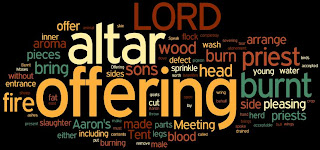
A Bloody Mess: How OT Sacrifices Pointed to Jesus | Pastor Jake Magee

We're presently working through the first part of the Old Testament as a church. The two things that are inescapable and challenging about the reading are the overwhelming details (e.g., genealogies, temple construction, laws, etc) and the death. By "death," I have in mind the meat grinder called the sacrificial system wherein you have an endless line bulls, rams, lambs, goats, and birds that are brought to the altar to be killed. The amount of blood shed required the civil engineers of that day to create plumbing (a canal of sorts) that directed this flow of blood away from the temple precinct. As people unfamiliar to Old Testament culture and religion, this is strange and no doubt disturbing. And yet as Christians, we regard the Old Covenant as purposely designed in its detail and death to point to Jesus and the gospel. As Augustine put it, "the New Testament is concealed in the Old, and the Old Testament is revealed in the New." Here are some of the ways the animal sacrifices of the Old Testament pointed to Jesus:

As we view the shadows cast by the Old Testament (Heb. 8:5), one shade that made an indelible impression upon the minds of God’s people was that of sacrifice. For them, to call the Old Testament sacrificial system a shadow would be making light of the very tangible and often horrid realities that this system displayed. The bloodshed, death, and stench that permeated the temple and tabernacle complex were enough to forever sear into their minds the seriousness with which God dealt with the people. Instead of the temple being the ancient Disneyland at which devotees frolicked in ritual and religious experience, it was a place of fear and reverence as one came painfully aware of sin’s penalty and God’s ominous holiness. However, as believers on both sides of the cross, we glory in Christ’s great sacrifice to which all others merely foreshadowed; we glory in the cross as we find a refuge from sin’s dread sway and tyranny; we glory in God’s appointed resolution of mercy and justice: a substitutionary sacrifice. It is upon this basis that God can graciously govern and commune with His church.

The first five chapters of Leviticus give us five different offerings, which together help us to survey Christ’s sacrifice for us: the basis of his rule over the church. In our examination of these sacrifices, we can only briefly highlight some of the many shadows that find their substance in the New Covenant reality.

I. The Burnt Offering (Leviticus 1):

Every part of the burnt offering was consumed by fire, thereby marking a person’s complete dedication to God. This offering accentuates Christ’s complete dedication to the Father. Jesus stated "I can do nothing on my own initiative. As I hear, I judge; and my judgment is just, because I do not seek my own will, but the will of Him who sent me” (John 5:30).

In tandem with the words of our Lord, the author of Hebrews makes this enlightening statement:

“For it is impossible for the blood of bulls and goats to take away sins. 5 Therefore, when He comes into the world, He says, "SACRIFICE AND OFFERING THOU HAST NOT DESIRED, BUT A BODY THOU HAST PREPARED FOR ME; 6 IN WHOLE BURNT OFFERINGS AND sacrifices FOR SIN THOU HAST TAKEN NO PLEASURE. 7 ¶ "THEN I SAID, 'BEHOLD, I HAVE COME (IN THE ROLL OF THE BOOK IT IS WRITTEN OF ME) TO DO THY WILL, O GOD.'" (Heb 10:4-7).

In contrast to the burnt offerings in Leviticus which could not remove sin, Christ removes sin by being that whole and perfect ‘burnt offering’ to God. He exercises complete dedication to God as the incarnate Son doing God’s will completely in the work of atonement.

II. The Grain Offering (Leviticus 2)

“Every good thing bestowed and every perfect gift is from above, coming down from the Father of Lights” (James 1:17). In recognition of this, the grain offering was the acknowledgment by God’s people of his gift of sustenance. In his providential love, Yahweh provides the bread we partake of, as well as that which quenches our thirst. In reference to Christ’s sacrifice, this offering highlights the truth that Jesus is “the corn of wheat (John 12:24) which went through the crushing mill of Gethsemane and the fierce oven of Calvary to become the Bread of Life” (Slemming 35). Manna from heaven has fallen upon the sons of men, providing the salvation they so desperately need.

III. The Peace Offering (Leviticus 3)

“Peace signifies...reconciliation, concord, and communion. And so these were called peace-offerings, because in them God and his people did, as it were, feast together, in token of friendship” (Henry I.357).

It is the grand proposition of the New Testament that Christ has appeased the enmity of God towards us by becoming the sacrifice that changes hatred into friendship. In the words of Paul, “He Himself is our Peace” (Eph 2:14). In Colossians 1:20, the apostle expounds this truth when he states that, “through Him to reconcile all things to Himself, having made peace through the blood of His cross; through Him, I say, whether things on earth or things in heaven.” Just as Christ calmed the tempestuous tides that raged against his disquieted disciple’s, so he has calmed the bellows of God’s anger that raged against our sin plagued hearts. Since Christ is our Peace offering, perfect peace surrounds our souls as the breeze of God’s good pleasure fills our sail with the view of bringing us to that heavenly shore.

IV. The Sin Offering (Leviticus 4)

Although some details are repeated in the three offerings already dealt with, I have not mentioned them because of their crucial role in these next two offerings. The sin offering was considered the most important, for it deals specifically with the very thing that causes such a massive rift between us and God. Whereas the last three offering were voluntary, the last two are compulsory, for they are essential for communion with a holy God.

In the sin offering, the idea of substitution and identification is presented. The sinner lays his hands upon a bull, goat, or lamb without blemish, which signifies the transference of guilt from the transgressor to the innocent. The animal’s life is then taken; its blood being sprinkled before the LORD. The offending party is now ‘forgiven’ and ‘freed’ because the punishment was bore by another.

What a clear and vivid foreshadowing of our Lord’s substitutionary atonement! Jesus, the spotless lamb, bears the sins of his people. Christ, free from any taint of sin, endures the punishment due to us so that we might go free. God “made Him who knew no sin to be sin on our behalf, that we might become the righteousness of God in Him” (2Cor 5:21).

V. The Trespass Offering (Leviticus 5)

Though similar, the sin and trespass offering exhibit some differences. The sin offering seems to deal with sins of omission, whereas the trespass offering deals with sins of commission. Some have suggested that the sin offering deals with the nature of sin, whereas the trespass offering deals the actions that follow. In any case, anyone contemplating the word “trespass” will be reminded of posted signs that state, “Do not trespass.” Anyone crossing such boundaries could be in danger of death. In a similar vein, God has ‘posted’ signs on certain activities. Failure to comply means death and banishment from New Jerusalem. Not only have we crossed such boundaries, but we have done so with impunity. We have reveled in crossing this line like a football player dancing in the in-zone after crossing that touch down mark.

Just as with the sin offering, Christ bears this death on the tree for us. Colossians 2:13&14 clearly testify to God’s gracious work in removing our trespasses. “¶ And when you were dead in your transgressions and the uncircumcision of your flesh, He made you alive together with Him, having forgiven us all our transgressions, 14 having canceled out the certificate of debt consisting of decrees against us and which was hostile to us; and He has taken it out of the way, having nailed it to the cross.”

These five offerings, taken together, give us a radiant portrait of that one great sacrifice of God’s Son. He rules his redeemed upon the foundation of his sacrifice. He governs his church with the wooden scepter of the cross; our King holds his church in the palms of his scared hands. The crown that distinguishes Him as the ruler of the church bears thorns and briers.

“For the Law, since it has only a shadow of the good things to come and not the very form of things, can never by the same sacrifices year by year, which they offer continually, make perfect those who draw near. Otherwise, would they not have ceased to be offered, because the worshipers, having once been cleansed, would no longer have had consciousness of sins? But in those sacrifices there is a reminder of sins year by year. For it is impossible for the blood of bulls and goats to take away sins” - Hebrews 10:1-4

Wednesday, April 20, 2011

A Good Church | By Pastor Steve Mason


Jeremiah 29:11

For I know the plans I have for you,” declares the LORD, “plans to prosper you and not to harm you, plans to give you hope and a future.


I believe every Christian has been created by God with a purpose that will not only make life exciting and worth living, but a purpose that will help build God’s kingdom. He has called you, He has equipped you and He wants to use you. A local church is just one of the instruments God has chosen to help you fulfill that purpose. Your involvement in ministry at your church is not just a coincidence, or simply a result of you volunteering to help, but rather it is part of a divine plan to help you experience one of life’s greatest adventures…to do the most important work in the world with people you grow to love. A good church will be committed to support you in every way possible. A good church will provide instruction, guidance and encouragement whenever and wherever it is needed. A good church will make you feel like you are an important part of a team, but more importantly, a good church will make you feel like you are a part of a family. If we commit our lives to Jesus, and if we commit ourselves to a good local church, then over time, God will do more than we ever imagined in us, with us and through us. So make your church a priority, and your time together with the people God put in that church with you will be one of life’s greatest pleasures.


Ephesians 2:10

For we are God’s handiwork, created in Christ Jesus to do good works, which God prepared in advance for us to do.